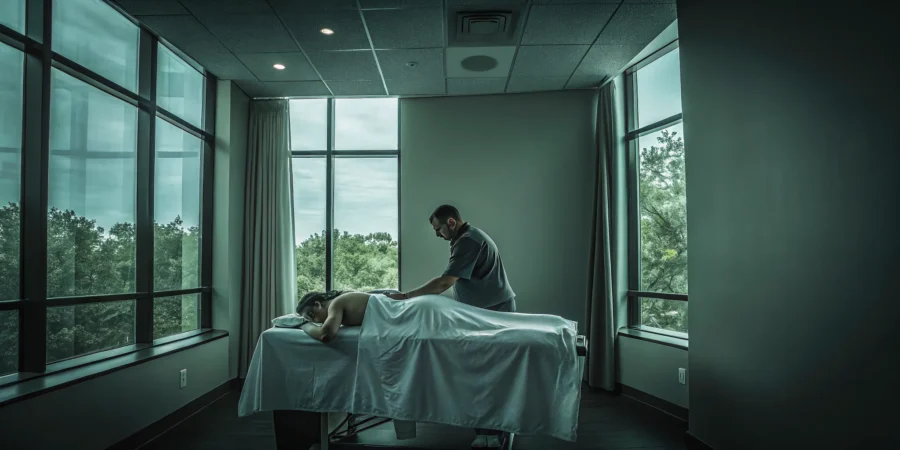
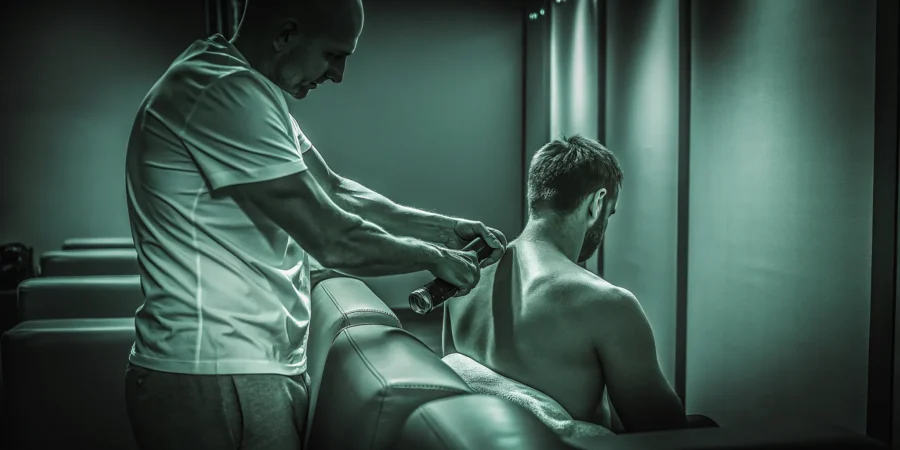
A sudden pop in the back of your thigh can instantly halt your Austin training season. This sharp tear demands a structured, fascia-first recovery plan to prevent long-term damage.
Book a hamstring strain massage session in Austin today →
A hamstring strain massage is a highly effective recovery tool when you begin sessions after the initial swelling and acute inflammation have subsided. Professional bodywork to the back of the thigh realigns torn muscle fibers, releases restricted fascia, and restores normal movement to your leg. This brings fresh oxygen-rich blood to the damaged tissue, breaks up scar tissue, and helps you move without persistent pain. According to the National Institutes of Health, these posterior thigh muscles are highly susceptible to severe repetitive strains. For active individuals, consistent deep tissue sessions speed up healing and reduce re-injury risk.
How does therapeutic bodywork actually rebuild damaged muscle tissue after a strain? The answer starts with knowing how the hamstring works and why it tears so easily. A smart recovery plan combines professional bodywork with the right timing and home care.
Understanding Hamstring Strains: From Tear to Recovery
Hamstring strains happen when the three muscles at the back of your thigh stretch past their limit. The injury ranges from mild fiber stretching (grade 1) to partial tearing (grade 2) to complete muscle rupture (grade 3). Each grade demands a different approach to recovery timing and bodywork depth.
How the hamstring muscles work
The back of your thigh relies on three muscles to build power and control movement. The hamstring muscle group includes the semimembranosus, semitendinosus, and biceps femoris.
These tissues span from your hip down past the knee joint. They bend your knee and extend your hip during daily movement and fast sports. Because these muscles cross two major joints, they face extreme stress during sprinting and jumping.
The three grades of hamstring strains
Hamstring injuries are grouped into three types based on how much the muscle fibers have torn:
- Grade 1 (mild): The muscle is stretched but not torn. You feel sudden pain but can still walk without a limp. Healing is quick with proper rest.
- Grade 2 (moderate): A large portion of the muscle fibers have torn. You will have pain, swelling, bruising, and weakness when bending your knee or bearing weight.
- Grade 3 (severe): A complete tear of the muscle tissue. You will not be able to use your leg at all. This level of injury needs a medical check right away.
Why athletes risk re-injury
Once you suffer a hamstring strain, the risk of hurting it again is high. Data shows that re-injury occurs in about one-third of athletes, most commonly within the first two weeks upon return to play. This happens because the tissue heals with stiff scar tissue instead of flexible muscle fibers.
To reduce this risk, focus on restoring both tissue length and strength. Using a tendon release massage → can help loosen tight connections and restore proper movement.
Can Massage Help a Strained Hamstring?
Yes, bodywork can help your hamstring heal, but timing is everything. Deep pressure applied during the first 48 to 72 hours can worsen swelling and slow natural healing. Once the acute inflammation subsides, professional deep tissue work breaks up scar tissue, realigns muscle fibers, and restores range of motion. The DEEP Method targets the fascia layer specifically, which standard massage often misses.
Timing your hamstring strain massage
If you get a hamstring strain massage too soon, you can make the injury worse. During the first 48 to 72 hours, the area is swollen, hot, and sore. Avoid deep bodywork on the muscle during this acute phase. Instead, rest, ice, and protect the thigh.
Once the sharp pain starts to fade, gentle bodywork can begin. Light touch helps move fluid and blood, bringing oxygen to the leg to start the repair process.
Why deep tissue work helps
As your hamstring heals, your body lays down stiff scar tissue that does not stretch well. This tight tissue binds muscles together, restricting how you move and increasing your risk of new injury. To prevent this, you need deeper care once the initial swelling goes down.
Modern research shows that recovery plans should include manual techniques, exercise programs, and other treatments. Deep tissue work uses focused pressure to break up stiff scar buildup and align new muscle fibers so they can stretch and contract without pain.
How the DEEP Method targets fascia
Your muscles are wrapped in a tough web of tissue called fascia. When you pull a hamstring, this web gets tight and dry, gluing your thigh muscles together and limiting your stride. At AUSTINDEEP, we use the proprietary DEEP Method to release tight fascia and target the root of your pain.
Our therapists train in-house so you get safe, steady care that restores full movement to your hip and knee. This is essential body maintenance for active Austin residents, not a spa visit. Learn how to prepare for your deep tissue session →.
When to Start Massage After a Hamstring Injury
Start your hamstring strain massage only after the acute phase ends, typically 48 to 72 hours post-injury. The sub-acute phase (days 3 to 7) allows gentle lymphatic work and cross-fiber kneading. Full deep tissue work can begin around week two, once pain and swelling have resolved and you can walk without pain.
The acute phase (first 48 hours)
During this early stage, your focus must be on reducing swelling and avoiding further strain. Rest your leg, use compression wraps, and keep the area still. Apply ice for no more than 20 minutes, two to three times each day. Do not seek deep bodywork during this time.
The sub-acute phase (days 3 to 7)
Your body starts to lay down new tissue to mend the tear. Expert bodywork at this stage uses manual techniques and active exercise to support healing. A skilled therapist uses light strokes toward the heart to move fluid and gentle cross-fiber kneading to keep new tissue from binding.
The recovery phase (week two and beyond)
By week two, the muscle is ready for deeper work. This is when an injury recovery massage → helps you get back to your sport. The DEEP Method releases the tight fascia that binds the hamstring after a tear.
You are ready for expert bodywork when:
- You can walk without pain.
- No sharp pain when pressing lightly on the back of your thigh.
- Deep bruising and major swelling are gone.
How the DEEP Method Supports Hamstring Recovery
The DEEP Method is a fascia-first full-body approach that differs from standard sports massage. It uses slow deep pressure on the connective tissue layer to release trapped fascia, break up scar tissue, and restore normal sliding between muscle layers. This reduces re-injury risk and produces lasting relief rather than temporary comfort.
Fascia release vs. standard massage
When you strain a muscle, your body lays down quick scar tissue to mend the tear. This new tissue is thick and messy. It binds to the fascia, pulling on your muscle and limiting movement. Standard hamstring strain massage often rubs only the surface. The DEEP Method goes deeper, targeting the connective tissue where scar tissue actually forms.
| Recovery Path | Approach and Technique | Therapist Training | Outcome Focus | Re-Injury Prevention |
|---|---|---|---|---|
| DEEP Method | Fascia-focused deep tissue work. | Standard in-house training. | Release tension and restore movement. | High, targets deep tissue. |
| Self-Treatment | Rest, ice, and light stretches. | None. | Short-term relief from pain. | Low, misses deep tight spots. |
| Generic Sports Massage | Broad rub on top muscles. | Varies by local spa. | Short-term ease and comfort. | Medium, misses deep tissue. |
Standard care for active bodies
All of our therapists train in-house so they can safely work on your exact pain points. Each session uses the same proven structure. We do not offer simple spa rubs. We focus on real recovery to get you back to your sport. Active bodies need body maintenance that addresses the cause of pain, not just the symptoms.
What to Expect During a Session for Hamstring Strain
A therapeutic bodywork session at AUSTINDEEP starts with a movement assessment, then uses the DEEP Method with cross-fiber friction. Myofascial release, and deep pressure on the hamstring and surrounding muscles (glutes, hips, calves). Your therapist provides an aftercare plan with stretching, hydration, and scheduling guidance.
Whether you visit our Lake Austin, Downtown, or Barton Creek location, the process is the same. Our goal is to get you back to your active lifestyle safely.
Initial assessment
Before any hands-on work starts, your therapist checks your movement. They ask about your injury timeline, test your hip and knee mobility, and feel for tight spots and scar tissue in the muscle group. This ensures the session fits your exact needs.
Hands-on work using the DEEP Method
Your therapist uses cross-fiber friction on scar tissue to break up tight fibers so the muscle can heal. They use myofascial release to stretch tight fascia and do deep tissue work on the surrounding glutes, hips, and calves to reduce stress on the hamstring. This full-body approach restores balance and improves your gait. Research on hamstring rehabilitation confirms the value of manual techniques.
Aftercare and recovery planning
After the session, your therapist gives you a clear home care plan. Hamstring recovery can take two to six weeks or longer depending on the severity of the tear. You will get guidance on safe stretching, hydration, and activity adjustment. Expect some soreness after the session as a normal part of healing.
Supporting Recovery Between Sessions
Between professional sessions, support your recovery with gentle stretching, foam rolling of surrounding muscles, proper ice and heat timing, hydration, smart activity pacing, and follow-up bodywork. Consistency is key to restoring full strength to the back of your leg.
Six steps for home hamstring care
- Gentle stretching: Move your leg through a pain-free range of motion daily. Never push into a sharp sensation. Hold each stretch for thirty seconds.
- Foam rolling technique: Roll the quads, glutes, and adductors to ease tension. Avoid direct pressure on the injured site.
- Ice and heat timing: Ice for twenty minutes after workouts. Apply gentle heat for ten minutes before stretching.
- Hydration and nutrition: Drink plenty of water and eat clean protein to support tissue repair.
- Adjusting activity: Walk before you run. Scale back any training that causes pain.
- Follow-up bodywork: Schedule your next session once sharp pain goes away. Regular care keeps your body moving well.
When to resume active training
Returning to sports too soon is a common mistake that leads to chronic issues. Research trials show that planned exercise steps are key to safe healing. For active athletes, mixing home care with a specialized massage for runners → provides a solid path back to peak form.
Patience and correct body maintenance will get you back on the road safely. A hamstring strain massage combined with the DEEP Method addresses the root cause of your injury. Not just the symptoms, giving you the best chance at a full recovery.
Get back to training. Book your hamstring recovery session in Austin today →
Frequently Asked Questions
What not to do with a strained hamstring?
Do not apply direct heavy pressure or run in the first 48 hours after injury. Avoid static stretching that pulls the torn fibers. Do not return to sport until you can walk, jog, and change direction without pain. Rest and gentle movement are safer during the acute phase.
How long after a hamstring strain can I get a massage?
Wait at least 48 to 72 hours after the initial injury. Start with very gentle lymphatic work in the sub-acute phase (days 3 to 7). Full deep tissue massage is safe around week two, once the major swelling and sharp pain have subsided. Your therapist will assess your specific injury before starting any work.
Is deep tissue massage good for hamstring strain?
Yes, once the acute phase is over. Deep tissue work breaks up the stiff scar tissue that forms after a muscle tear. It realigns new muscle fibers, releases tight fascia, and improves blood flow to the area. This lowers your risk of re-injury and helps you return to full activity faster.
Can a hamstring strain heal without massage?
Yes, mild grade 1 strains often heal with rest, ice, and gentle stretching alone. However, without professional bodywork, the scar tissue that forms may bind muscles together, limiting your range of motion and increasing the chance of re-injury. Bodywork helps the tissue heal in a more flexible pattern.
How many massage sessions do I need for a hamstring strain?
Most people benefit from 3 to 6 sessions spaced one week apart. Mild strains may resolve in 2 to 3 sessions. Grade 2 or 3 strains often need 4 to 6 sessions combined with a home care routine. Your therapist will adjust the plan based on how your tissue responds.