If you have ever felt a sharp, stabbing pain in your heel with your first steps out of bed, you know how debilitating plantar fasciitis can be. That tight, pulling sensation along the bottom of your foot can turn a simple walk into a painful effort. For active Austin residents who spend their days on their feet, train hard, or carry chronic stress in their bodies, this condition is more than an inconvenience. It is a mobility problem that affects how you move, recover, and perform.
The good news is that targeted therapeutic bodywork can help. Research shows that roughly 90% of plantar fasciitis cases resolve within a year through nonsurgical treatment. And professional massage is one of the most effective tools for lasting relief. But not all massage is created equal. When foot pain stems from tight connective tissue, a fascia-first approach that treats the entire posterior chain delivers far better results than spot-treating the heel alone.
In this guide, we will explore how massage for plantar fasciitis works, why the tension often starts upstream in your calves and hamstrings. And how AUSTINDEEP’s proprietary DEEP Method™ targets the root cause of foot pain for lasting relief.
What Is Plantar Fasciitis and How Does Massage Help?
Plantar fasciitis is a common source of heel pain that makes daily movement difficult. It is a progressive degenerative disorder of the plantar fascia rather than a simple case of brief inflammation. Research shows that plantar fasciitis affects about 0.85% of U.S. adults, causing sharp, stabbing pain near the heel of the foot during their first steps in the morning.
Anatomy of the Plantar Fascia
The plantar fascia is a thick band of connective tissue on the bottom of your foot. It connects your heel bone to your toes, supporting the natural arch of your foot. This strong band also acts as a vital shock absorber when you walk, run, or stand. When this tissue faces constant strain, tiny micro-tears can develop in the fibers, leading to chronic heel pain and serious mobility issues.
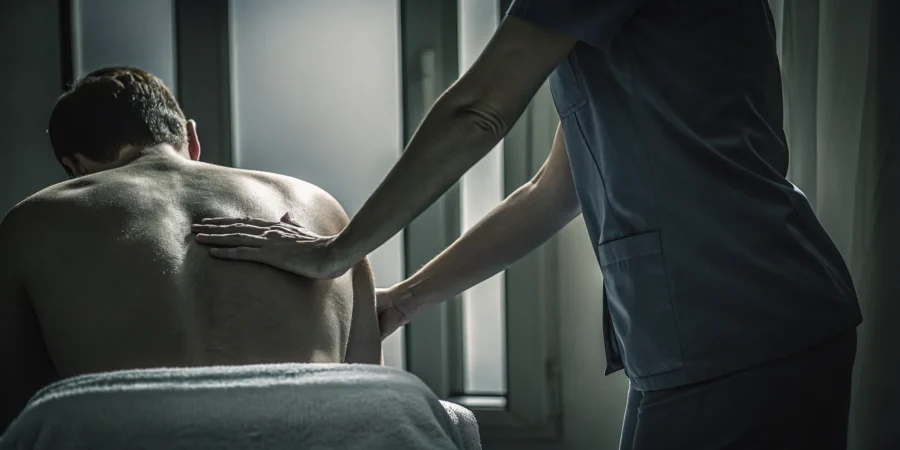
How Targeted Massage Relief Works
When dealing with persistent foot pain, targeted bodywork is a helpful option. The plantar fascia plays a critical role in foot biomechanics by providing arch support and acting as a shock absorber. When this tissue becomes strained, it loses its ability to cushion each step, leading to the sharp heel pain that defines this condition.
In fact, about 90% of plantar fasciitis cases resolve within one year through nonsurgical treatments, including therapeutic massage. Focused deep tissue work helps break down scar tissue and reduces stiffness in the tight fibers of your foot. This increases blood flow to the damaged area, which helps speed up the body’s natural recovery process. When performed by a trained professional, this work targets not just the surface of the foot but the deeper connective layers where chronic tension accumulates.
Self-Massage Versus Professional Care
While rolling your foot on a tennis ball or using a cold bottle can give short-term relief, these self-treatments do not address the root of the problem. True healing comes from treating the entire connective tissue system. Working with a professional therapist ensures a precise focus on key trigger points in the foot and leg. This targeted approach is much more effective for treating foot pain like plantar fasciitis → and ensuring lasting relief.
Why Foot Pain Is Often a Fascial Chain Problem
Plantar fasciitis can feel like a sharp, isolated pain in your heel. But foot pain rarely starts and ends in the foot. Your body moves through a web of connective tissue called the fascial chain. When one part of this chain tightens, it pulls on everything else. To get lasting relief, you must look upstream at the muscles and tissue that connect to your sole.
The Calf and Heel Connection
The calf muscles, known as the gastrocnemius and soleus, connect directly to your heel. They attach to the heel bone through the Achilles tendon, which then merges into the plantar fascia on the bottom of your foot. If your calves are tight, they pull upward on the heel. This constant tension strains the plantar fascia, which leads to micro-tears and sharp pain when you walk. Treating only the foot without addressing the tight calf muscles ignores the root cause of the strain.
Superior Recovery Rates Through Full-Leg Bodywork
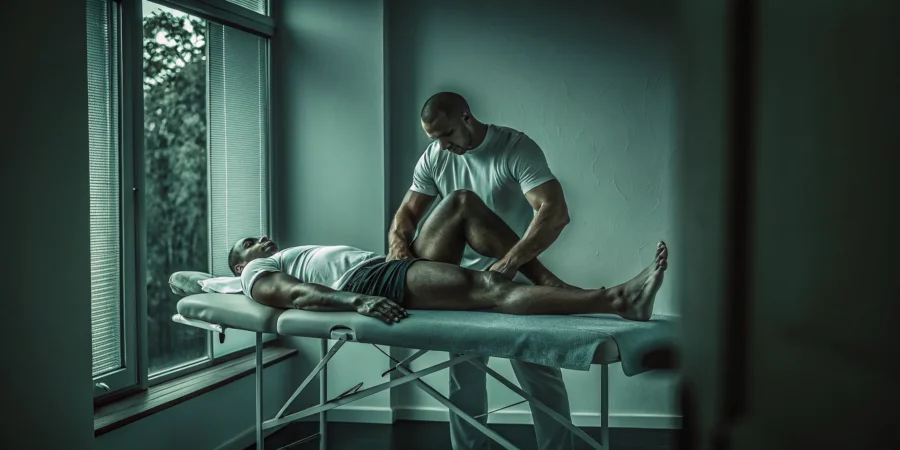
Because the feet and legs are so closely linked, localized rubs are rarely enough to fix the issue. A study on sports injury recovery shows that patients experience superior recovery rates when massage treats not just the plantar fascia, but also the surrounding leg muscles. Releasing the posterior chain, including the calves and hamstrings, takes the upward pressure off your heel. For active people, this whole-leg approach is crucial. Combining targeted leg work with a regular massage for runners → can help prevent foot strain from returning during high-impact training.
The DEEP Method Fascia-First Approach
At AUSTINDEEP, we address these interconnected issues directly. Our proprietary fascia release massage → is designed to target connective tissue restrictions across the entire lower body. We use a fascia-first approach to loosen the tight bands of tissue that pull on your foot. This method restores movement, releases held tension, and helps the body reset so your relief lasts. To ensure precision and consistency, all AUSTINDEEP therapists complete a rigorous 500-hour in-house training program. Every session follows the same proven structure, giving you the elite body maintenance you need to keep moving without pain.
Self-Massage Techniques vs. Professional Therapeutic Bodywork
You can use simple self-care routines to help manage mild foot discomfort. Common ways to ease tight tissues at home include gentle thumb pushes along the arch, slow thumb pulls. Rolling your foot over a firm ball, or rolling the arch over a frozen bottle of water, according to clinical guidelines on Healthline. For best results with home care, experts at Medical News Today recommend massage several times a day for at least 6 weeks. These quick home methods are highly useful for daily maintenance, but they have major limits when you deal with severe or chronic plantar heel pain.
The Limits of Home Care for Chronic Pain
Self-massage mostly works on the surface level of the foot. It cannot reach the deep connective tissue layers where severe restrictions build up. Also, home care does not address the upstream fascial chains in your calves, hamstrings, and hips that pull on your heel. If you only rub the bottom of your foot, you miss the main source of the tension. Inconsistent hand pressure and poor angles make it hard to get lasting relief through self-care alone.
How Professional Bodywork Targets Root Causes
Professional bodywork uses deep, structured pressure to release tough fascial blocks along your entire posterior chain. At AUSTINDEEP, our therapists use the fascia-first DEEP Method™ to work on the whole leg, ankle, and foot together. To address deep-tissue pain relief and help the body reset, we recommend massage for mobility sessions that last 60 to 90 minutes. This specialized care targets the true root causes of your foot strain so that relief lasts.
| Feature | Self-Massage Techniques | DEEP Method™ Bodywork |
|---|---|---|
| Tissue Depth Reached | Surface layers only | Deep myofascial layers |
| Muscle Groups Addressed | Bottom of the foot | Full posterior chain and calf |
| Technique Consistency | Varies by individual effort | Standardized in-house training |
| Time Investment | Few minutes daily for 6 weeks | Targeted 60 to 90 minute sessions |
| Long-Term Results | Temporary, minor relief | Lasting movement and recovery |
How Often Should You Get Massage for Plantar Fasciitis?
When you use bodywork to manage heel pain, how often you get care matters more than how hard a therapist presses. Regular sessions keep your tissue loose and prevent the fascia from tightening back up. A consistent schedule is what makes the difference between temporary relief and lasting recovery, especially for active individuals whose training and daily routines constantly challenge their connective tissue.
Your Plan for the First Month
To start your care, we advise scheduling professional bodywork once or twice a week. In the first four weeks. The goal is to break down tight spots and scar tissue in the foot and address the connected calf tension that pulls on your heel. This phase is essential because fresh adhesions release more easily, and catching them early prevents the fascia from re-tightening between sessions. Consistent care is needed during this period to reset your movement patterns. You can learn more about how we help your feet move naturally by reading about massage for mobility →.
Moving to Maintenance and Home Care
Once your sharp pain begins to fade and you regain pain-free range of motion, you can transition to sessions once a month to keep your feet healthy. Maintenance care is where long-term results live. Many active Austin clients find that a monthly 60-minute DEEP Method session combined with at-home self-care keeps plantar fasciitis from returning.
In between your appointments, home care plays an important role. Doing a brief, light foot massage on your own multiple times a day for at least six weeks can help your recovery. As shown by clinical reviews hosted on the PubMed database →. During our 60-minute sessions, we have ample time to address both your foot and your calf holistically, so you leave feeling genuinely reset rather than temporarily relieved.
What to Expect in a DEEP Method Session for Foot Pain
If you suffer from plantar fasciitis, your feet need more than a generic rub. A professional fascia release massage → targets the deep tissue layers to ease pain at the source. At AUSTINDEEP, we use a structured, four-step protocol built to release tension across your entire lower body. This system ensures you get consistent, therapeutic body maintenance to help your body reset and heal.
A Structured, Four-Step Protocol
- Warming techniques: Your session starts with localized heat and gentle movement. This prepares your soft tissue and increases blood flow to your foot and lower leg.
- Posterior chain deep tissue work: Your therapist systematically works the calves, Achilles tendon, and plantar fascia. Releasing these connected areas takes the tight upward pull off your heel.
- Trigger point therapy: We target sensitive points in your foot arch, heel attachment, and calf. Releasing these spots helps stop referred pain patterns.
- Full kinetic chain fascial release: We work further upstream on your hamstrings and glutes if needed. This step restores balance to the whole lower body.
Consistent Care from Expert Therapists
You never have to worry about getting a different experience when you book with us. Every therapist at AUSTINDEEP is trained in-house and completes a rigorous 500-hour training program at the DEEP Academy. Because of this deep training, each session follows the exact same proven system for precision and results. No matter which of our three Austin locations you visit, you get the same elite, results-focused body maintenance.
Proactive Steps After Your Session
After your session, your therapist will give you simple steps to help maintain your results at home. These tips usually include gentle calf stretches, foot rolls with a lacrosse ball, and guidance on how to pace your return to high-impact training. To keep your feet moving without pain, check out our specialized massage for runners → to support your long-term recovery goals.
Frequently Asked Questions
Can massage help plantar fasciitis?
Yes. Specialized fascia-focused bodywork helps by releasing tension and breaking down scar tissue in the plantar fascia. This helps increase blood flow, promotes healing, and restores flexibility to tight calf muscles and heels.
How often should you get therapeutic bodywork for plantar fasciitis?
For active relief, we recommend professional sessions once or twice a week during the first month. As your pain decreases and heel movement improves, you can taper sessions to once or twice a month for ongoing body maintenance.
Why is calf massage important for plantar fasciitis?
The calf muscle connects directly to your heel through the Achilles tendon. Tight calf muscles pull on the heel, which strains the plantar fascia. Releasing tension in the calf and leg muscles reduces this constant pull and eases foot pain.
How is the DEEP Method™ different from regular spa massage?
Unlike a relaxation spa massage, the DEEP Method™ is a structured, fascia-first therapeutic system. Our in-house trained therapists work deep into the connective tissues of your foot and entire posterior chain to address the root causes of tension.
Ready to Get Lasting Relief from Plantar Fasciitis?
Ignoring persistent heel pain can turn a minor strain into chronic tissue damage. When you walk on a tight plantar fascia day after day, your body adapts by tightening your calves and changing your stride. Starting deep tissue work now helps release this built-up tension, restores your natural movement, and stops further wear on your foot.
Ready to restore your mobility? Book a DEEP Method session at an Austin location to get back on your feet without pain.